
When David Mercer filed a homeowners claim after his Australian Shepherd nipped a contractor on the hand, his insurer denied the claim and cancelled the policy at renewal. The denial letter cited a breed exclusion clause Mercer had signed three years earlier without reading. His carrier, one of the ten largest in the country, quietly excludes fourteen breeds and "mixes primarily consisting of" those breeds from dog bite coverage. Herding breeds are not on the headline BSL lists, but they show up on insurance underwriting questionnaires more often than most owners realize.
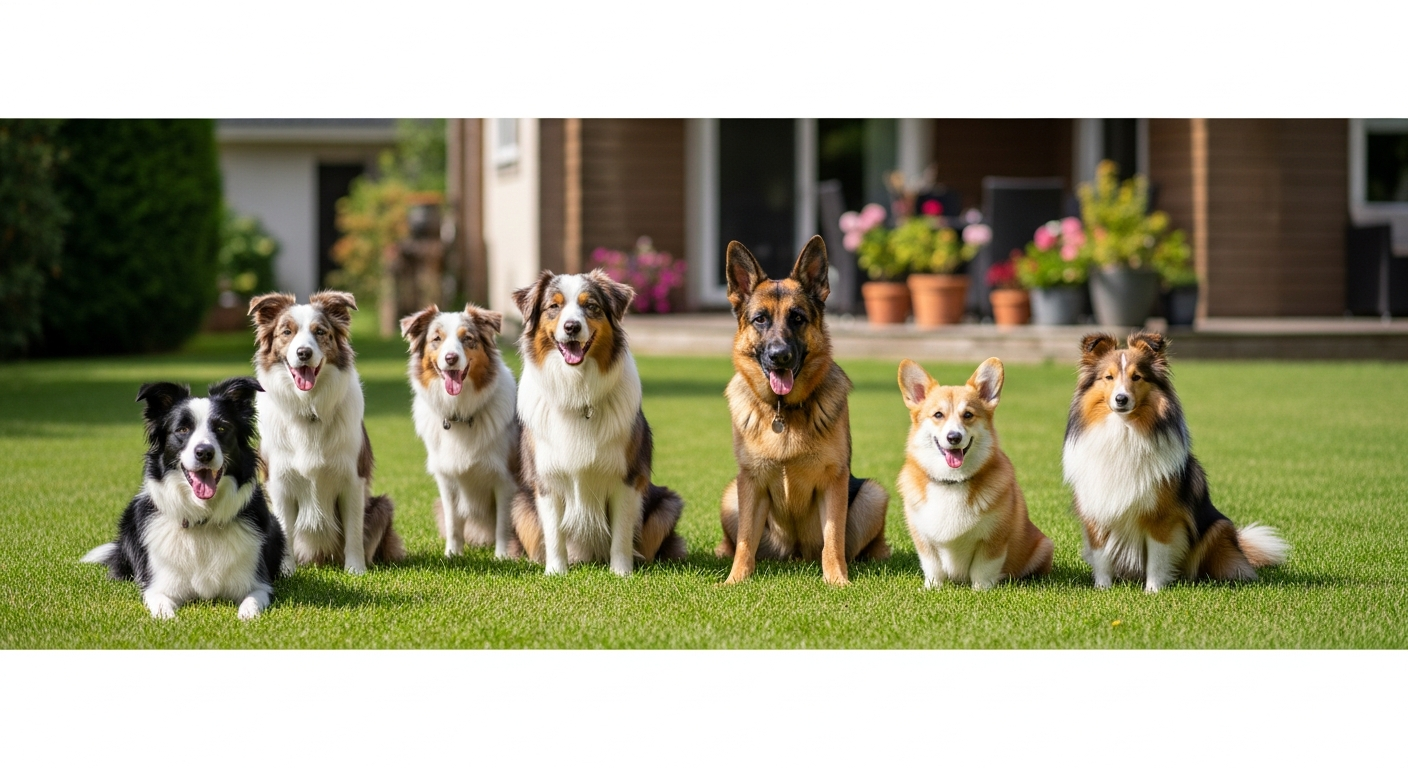
This guide walks through how carriers underwrite for dog bite risk, which clauses appear most often, how to read your declarations page, and what to do when you are rejected or excluded.
How Underwriting Actually Works
Homeowners carriers treat dog bite exposure as either a named covered risk, a conditional covered risk, or an excluded risk. The Insurance Information Institute estimates that dog-related injury claims cost U.S. carriers $1.13 billion in 2022, with the average claim paying out roughly $64,500. That level of exposure explains why underwriting is tightening in 2025 and 2026.
Three underwriting models dominate:
- Breed-blind model. Coverage applies to all dogs unless a specific behavior exclusion is triggered (prior bite, designation). State Farm and USAA use variations of this approach nationally.
- Breed list model. Named breeds are excluded from liability or require a separate policy. Most major carriers (Allstate, Travelers, Liberty Mutual) use some form of this.
- Individual dog model. Underwriting asks about bite history for each dog regardless of breed. A clean-history dog of any breed is covered; any dog with a bite history is excluded.
The Breeds Most Often Excluded or Surcharged
Exclusion lists vary by carrier and state. The breeds that appear most often, based on a review of insurance company published underwriting guidelines, include Pit Bull-type dogs, Rottweilers, German Shepherds, Doberman Pinschers, Chows, Akitas, Wolf hybrids, and "any dog with a bite history regardless of breed."
Herding breeds appear less often on exclusion lists but frequently show up under conditional terms: "Australian Cattle Dog, Australian Shepherd, Belgian Malinois, Border Collie, and herding mixes covered only with documentation of current obedience training and no bite history." That language is increasingly common in the 2024 and 2025 renewals we reviewed.
Reading Your Policy Correctly
Go to your declarations page and find the "Liability — Section II" summary. The numbers you care about are: per-occurrence limit (typically $100,000 to $500,000), aggregate limit, and medical payments coverage. Then open the full policy and search for "canine," "dog," and "animal liability." Exclusions or sub-limits often appear as endorsements, not on the declarations page.
"Three out of four homeowners who think they are covered for dog bites have never read their endorsements. The exclusion is usually on form HO-04-96 or a state-specific variant."
— Licensed Property & Casualty Broker, consultation note
Cost Comparison: Carrier Approaches
| Carrier approach | Base premium impact | Coverage for herding breed | Bite exposure cap |
|---|---|---|---|
| State Farm (breed-blind) | None | Full | Per policy limit |
| USAA (breed-blind) | None | Full | Per policy limit |
| Allstate (conditional) | 5-15% surcharge | With obedience cert | $100,000 sub-limit common |
| Liberty Mutual (exclusion-heavy) | None | May require endorsement | Excluded without endorsement |
| Farmers (individual-review) | Case-by-case | Clean history required | Full if approved |
Separate Canine Liability Policies
When a homeowners carrier excludes coverage, a separate canine liability policy fills the gap. Providers like Einhorn Insurance (dogliabilityinsurance.com), Dean Insurance, and specialty animal-focused brokers offer policies with $100,000 to $300,000 limits for $300 to $1,200 annually depending on breed, bite history, and state.
The key underwriting factor on these policies is bite history, not breed. A Belgian Malinois with a clean record often receives better terms than a mixed-breed dog with one prior incident. If you own a herding breed and are shopping these policies, gather the dog's veterinary records, obedience certificates, and a written statement from your vet confirming no behavioral concerns.
What to Do If You Are Denied or Excluded
First, do not cancel your existing policy. A gap in coverage damages future underwriting. Second, request the specific reason for denial in writing. Federal FCRA-adjacent rules require carriers to disclose the basis. Third, shop aggressively. Independent brokers have access to surplus and specialty markets that direct-write agents do not.
Fourth, consider umbrella coverage as a backstop. A $1,000,000 personal umbrella policy runs $180 to $400 annually for most households. Umbrellas typically extend liability beyond underlying homeowners limits and may cover dog-related claims that the underlying policy partially covers. Confirm with the umbrella carrier directly, because exclusions flow through.
What Actually Lowers Your Rate
- Completion of a certified obedience program (Canine Good Citizen certificate is recognized by most carriers).
- Clean bite and incident history documented by the vet.
- Sterilization status (intact males price higher with some carriers).
- Secure fencing documented with photos.
- No prior dangerous dog designation (if yours has one, see our guide to dangerous dog designations).
- Higher deductible trade-off (raising deductible to $2,500 can offset surcharges).
When Renters Are Affected Too
Renters insurance carries many of the same exclusions. If you rent with a herding breed, check both the landlord's policy expectations and your renters policy language. The overlap with renting with a herding breed is meaningful, because some landlords require a specific liability limit and proof of coverage before accepting the dog.
Regulatory Changes to Watch
Five states (Michigan, Nevada, New York, Massachusetts, and Pennsylvania) have passed or are considering legislation that prohibits homeowners insurers from denying coverage based on breed alone. Nevada's NRS 687B.450 and Michigan's HB-4170 are the most influential. These laws still allow bite-history exclusions and dangerous dog exclusions; they remove breed as a standalone criterion. Owners in those states have stronger footing in denial disputes than owners elsewhere.
Review your declarations page within the next thirty days if you own a herding breed. Find the exclusion endorsement if there is one. Shop the market if your carrier is on the exclusion-heavy side. The cost of a surprise denial after a bite is measured in tens of thousands of dollars, and the prevention work is one afternoon and a broker call.
For context on how insurance interacts with liability law, see our liability guide, and for the state-specific rules that feed into underwriting, the state-by-state overview.