
At 6:47 AM on a Tuesday morning in March 2025, Sandra Vega received a $350 citation in Riverside County, California. Her crime: letting her Australian Shepherd Biscuit run briefly off-leash in an empty parking lot at the end of a dead-end road. A county animal control officer had been sitting in an unmarked car, watching.
"There wasn't another human being within half a mile," Vega told me. "No other dogs, no pedestrians, nothing. But technically, I was in violation of the county leash ordinance. The officer made that very clear."

Vega's experience illustrates the tension that herding breed owners face daily. These are dogs bred for centuries to work at distance from their handlers, to make independent decisions, to cover miles of ground in pursuit of livestock. Confining them to a six-foot leash isn't just challenging—for many owners, it feels cruel. But leash laws exist, enforcement is real, and the consequences extend far beyond fines. Finding housing that accommodates exercise needs adds another layer of complexity for those renting with a herding breed.
The Patchwork: How Leash Laws Work
Unlike vaccination requirements or licensing mandates, leash laws are almost exclusively local. Only a handful of states have statewide leash requirements, and those typically apply only to specific contexts (state parks, for instance). The practical reality is that every city, county, and sometimes even neighborhood association can establish its own rules.
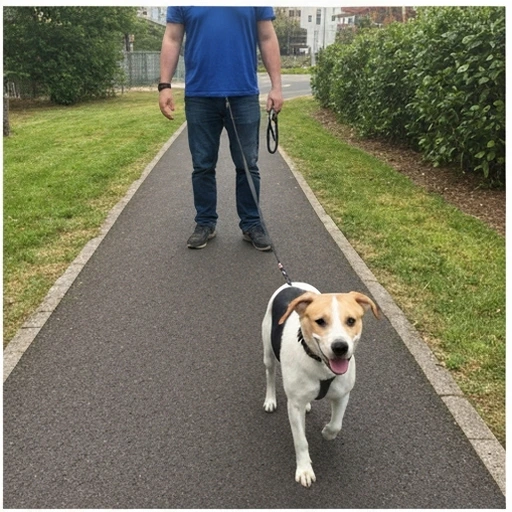
This creates a regulatory maze. In Los Angeles County alone, I counted 88 distinct leash ordinances across incorporated cities and unincorporated areas. Maximum leash lengths range from 4 feet (Beverly Hills) to 10 feet (Palmdale). Some jurisdictions require "visual control" even when leashed; others permit voice control in designated areas.
Common Leash Law Structures
| Type | Description | Prevalence |
|---|---|---|
| Universal Leash | Dogs must be leashed everywhere except private property | ~45% of jurisdictions |
| Designated Off-Leash | Leash required except in specified dog parks or areas | ~35% of jurisdictions |
| Voice Control | Off-leash permitted if dog responds reliably to commands | ~12% of jurisdictions |
| Time-Based | Off-leash permitted during specific hours in certain areas | ~8% of jurisdictions |
The Consequences of Violation
Leash law violations might seem minor, but the cascading effects can be severe—particularly for herding breed owners.
First citations typically range from $50 to $500 depending on jurisdiction. But repeat violations escalate quickly. In Phoenix, a third leash law violation within 24 months triggers mandatory court appearance and possible classification as a "chronic violator," which can result in restrictions on the number of dogs you may own.
"My client received four leash citations over eighteen months—same park, early morning, dog always under voice control. The fourth citation triggered a hearing where the city sought to limit him to one dog. He had three Border Collies he competed with in agility. He ended up moving to another county."
— Douglas Kim, Animal Law Attorney, Phoenix, Arizona
More concerning: leash law violations can affect liability exposure in bite cases. In strict liability states, being off-leash when an incident occurs can support claims of negligence per se—the legal doctrine that violating a safety statute constitutes automatic negligence. This can increase damage awards and make insurance coverage disputes more likely.
Finding Legal Off-Leash Options
The good news: off-leash opportunities do exist, and they're expanding. The Trust for Public Land reports that 91% of the 100 largest U.S. cities now have at least one designated dog park, up from 74% in 2015. But for herding breed owners, the question isn't just whether off-leash areas exist—it's whether they're suitable.
Public Dog Parks: Proceed with Caution
Municipal dog parks present specific challenges for herding breeds. The combination of unfamiliar dogs, varying training levels, and owners who may not understand herding behavior creates risk.
Rachel Thompson, who runs a Border Collie rescue in Oregon, stopped recommending public dog parks to adopters after documenting fourteen incidents over two years where her placed dogs were either attacked or accused of aggression for displaying normal herding behavior.
"A Border Collie stalking and eyeing another dog isn't being aggressive—it's being a Border Collie. But try explaining that to someone whose Labrador just got stared down for two minutes. They see predatory behavior. We see breed heritage."
— Rachel Thompson, Executive Director, Pacific Border Collie Rescue
Voice Control Jurisdictions
Twelve percent of jurisdictions permit off-leash dogs under voice control in designated areas. These regulations typically require:
- Immediate recall response (dog returns within seconds of command)
- Handler maintains visual contact at all times
- Dog does not approach other people or animals without permission
- Owner carries leash and can leash dog immediately when required
For well-trained herding dogs, voice control areas can be ideal. The catch: enforcement is subjective. What constitutes "immediate" recall? How quickly must the dog respond? These ambiguities create room for citation even when owners believe they're compliant.
- Train reliable recall to competition obedience standards
- Video document your dog's recall response periodically
- Carry written proof of training (CGC certificate, obedience titles)
- Know the specific language of your jurisdiction's voice control ordinance
- Leash proactively when you see other users approaching
Private Off-Leash Facilities
The growth of private dog exercise facilities has created new options for owners seeking off-leash time. Services like Sniffspot allow property owners to rent their land for private dog use, typically $10-$25 per hour.
I visited six such facilities across Southern California last fall. The advantages for herding breed owners were clear: controlled environment, no unknown dogs, space to work on distance commands. The primary limitation is availability—in major metropolitan areas, popular facilities book weeks in advance.
Working Within the System
Some owners have found success advocating for expanded off-leash options in their communities. The key is framing arguments in terms local officials respond to.
In 2023, a coalition of dog owners in Boise successfully lobbied for designated voice control hours at three city parks. Their approach focused on data: they presented incident reports showing that the existing dog park was overcrowded and generating complaints, while underutilized parks nearby could accommodate off-leash use during low-traffic hours with minimal conflict.
"We didn't argue about our dogs needing to run free. We argued about reducing congestion at the existing dog park, improving park utilization, and giving neighbors in underserved areas better amenities. We made it about community benefit, not dog owner convenience."
— Thomas Blackwell, Boise Off-Leash Coalition organizer
The Reality of Enforcement
Understanding how leash laws are actually enforced helps owners manage risk. Based on interviews with animal control officers in eight jurisdictions, several patterns emerge.
Enforcement is complaint-driven in most areas. Officers rarely patrol specifically for leash violations; they respond to calls. This means high-visibility violations—dogs chasing joggers, approaching children, or entering areas where they disturb other users—generate citations. Low-key off-leash activity in empty spaces often goes unnoticed.
That said, some jurisdictions actively enforce leash laws as revenue generators. Sandra Vega's experience in Riverside County isn't unique. Several California counties have acknowledged using animal control citations to supplement budgets during fiscal shortfalls.
- Dog approaching or chasing people who haven't consented
- Dog off-leash near playgrounds or schools
- Dog off-leash after previous warnings or citations
- Owner unable to demonstrate immediate control when requested
- Any incident involving contact with another person or animal
Leash laws exist, and for herding breed owners, compliance requires either accepting limitations or actively finding legal alternatives. Be aware that vocal herding breeds may also face noise ordinance complaints when frustrated by confinement. The dogs bred to work across vast landscapes now live in a world of six-foot boundaries. Working within that reality—while advocating for reasonable change—remains the responsible path forward.