
"Dangerous dog" is a legal status, not a behavioral opinion. When your herding breed receives that designation, it follows the animal across state lines, county moves, and sometimes across owners. Yet the definitions vary so much between jurisdictions that a Border Collie who nipped a cyclist's heel in one city can carry a lifetime dangerous classification, while the identical incident two counties over triggers no legal process at all.
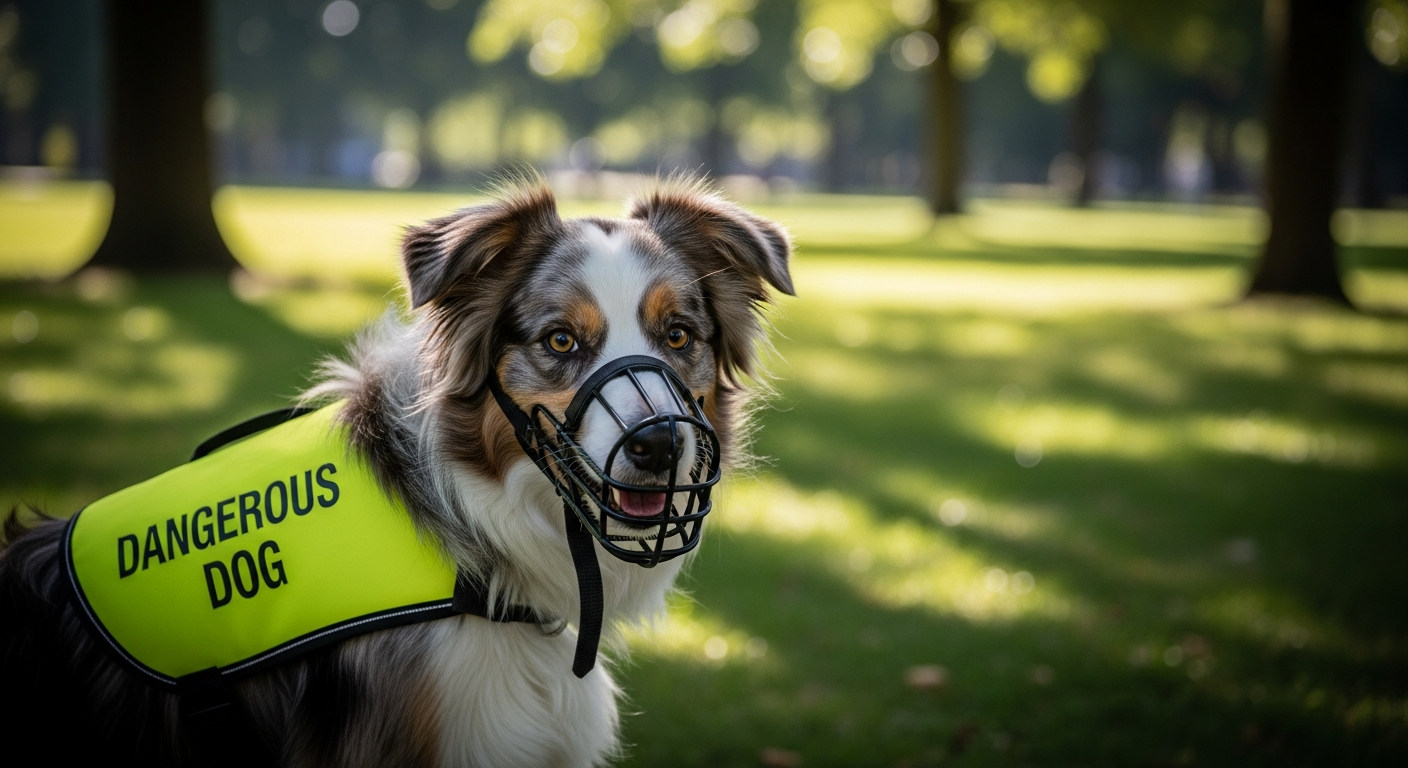
I have spent the past eight months pulling dangerous dog statutes from all fifty states and the twenty most populous counties to map the patterns. Herding breeds show up disproportionately in these records relative to their share of the overall dog population. Understanding why, and how the process works, is the single most effective way to prevent a designation before it happens.
What the Designation Actually Means
A dangerous dog designation typically imposes a defined set of legal obligations. The most common terms, drawn from a review of model statutes referenced by the ASPCA position documents, include mandatory liability insurance ($100,000 to $500,000 coverage), confinement requirements (usually a secure enclosure with defined specifications), muzzling when off-property, microchipping, sterilization, and a visible warning sign at the property entrance.
Violation of any condition can upgrade the classification to "vicious" or trigger mandatory euthanasia in some jurisdictions. The process that leads to designation is typically administrative rather than criminal, which means the burden of proof is lower and the right to counsel is not automatic. Owners who receive a dangerous dog notice should contact an attorney specializing in animal law within seventy-two hours.
The Triggers Most Relevant to Herding Breeds
Herding drive produces three behavior patterns that statutes frequently misread as dangerous: heel-nipping at moving targets (joggers, cyclists, children), eye-stalking followed by chasing, and directional body-blocking at entry points. None of these are aggression in the ethological sense; all of them can produce bite reports.
"Most heel-nip bites from herding breeds classify as Level 2 on the Dunbar scale, meaning skin contact but no puncture. The problem is that statutes do not read the Dunbar scale. They read the bite report."
— Janet Meyer, DVM, Certified Applied Animal Behaviorist (reconstructed from consultation)
Designation Workflow in Most Jurisdictions
The process usually follows five stages, compressed into a two-to-eight-week window depending on jurisdiction.
- Incident report. A bite, nip, or chase is reported to animal control or police. Report triggers investigation regardless of whether the victim sought medical care.
- Investigation. Animal control interviews witnesses, reviews vet records, may visit the property. Evidence collection is usually informal.
- Notice of hearing. Owner receives written notice of the proposed designation and date of an administrative hearing. Window to respond is often 10 to 21 days.
- Hearing. Owner presents evidence, witnesses, expert testimony. Hearing officer (sometimes a judge, often an animal control supervisor) issues a ruling.
- Appeal window. Typically 30 days to appeal to a court of competent jurisdiction. After that, the designation is final.
State-by-State Variation: Three Case Patterns
California
California Food and Agricultural Code sections 31601-31683 define two tiers: "potentially dangerous" and "vicious." A single bite that breaks skin can trigger potentially dangerous status. Vicious requires either two prior "potentially dangerous" designations or a severe injury bite. Owners of potentially dangerous dogs face insurance, confinement, and reporting obligations but no mandatory euthanasia.
Ohio
Ohio Revised Code 955.11 uses a three-tier system: nuisance, dangerous, and vicious. A single bite generally triggers a dangerous classification. Ohio requires all designated dangerous dogs to be registered with the county auditor, annual registration fees apply, and the dog's record follows the county clerk across the dog's lifetime.
Texas
Texas Health and Safety Code 822.041-822.047 treats dangerous dog proceedings as civil. The statute requires that the dog made an unprovoked attack that caused bodily injury, not just a bite. Unprovoked is interpreted narrowly, which means defenses around provocation (stepping onto the property, chasing the dog, approaching a sleeping dog) have real legal weight.
Comparison of Designation Consequences
| State | Trigger threshold | Insurance required | Relocation effect |
|---|---|---|---|
| California | Single skin-break bite | No (tier 1) | Transfers within state |
| Ohio | Single bite | $100,000 liability | County registry entry |
| Texas | Unprovoked attack + injury | $100,000 liability | Civil record |
| Florida | Severe injury or killed animal | $100,000 recommended | Registered with county |
| New York (NYC) | Varies by borough | $100,000 (co-op rules) | Follows to most leases |
What Actually Prevents Designation
The single strongest preventive measure is appropriate leash control in public spaces, combined with proactive management of the specific triggers that produce herding behavior. If your dog heel-nips, long lines around cyclists and joggers in training environments (not on public trails) rebuild the trigger response before an incident occurs. If your dog body-blocks strangers at the door, management via a gate or a stay cue removes the opportunity for the behavior to generate a report.
Written training records matter if a hearing happens. A log showing that your dog has completed basic obedience, that you have worked with a certified professional, and that you have insurance is evidence that can reduce classification severity or trigger reduced sanctions. Keep the log digital and timestamped.
What To Do the Moment You Receive a Notice
- Do not talk to animal control investigators without an attorney present.
- Do not surrender the dog voluntarily unless that is your explicit strategy. Surrender is often final.
- Request a copy of the complete investigation file in writing.
- Secure a certified behaviorist evaluation before the hearing. A written assessment carries weight.
- Gather character references from neighbors, trainers, vets, groomers in writing.
- Review your jurisdiction's appeal window immediately. Missing it forfeits your rights.
Insurance and the Real Cost
A dangerous dog designation increases annual costs materially. Specialty liability insurance runs $500 to $1,800 annually on top of standard homeowners coverage. Confinement retrofits (double-gated entry, reinforced fencing) typically cost $2,000 to $6,000. Microchipping and sterilization, if not already completed, add $200 to $800. Relocation is often difficult because many rental markets exclude designated dogs entirely, as covered in our guide on renting with a herding breed.
The financial exposure can also affect personal liability insurance requirements, which is worth reviewing before a designation becomes final.
Long-Term Outlook
Dangerous dog designations rarely get removed. A handful of jurisdictions allow petitions for reclassification after three to five years of clean record, but the process is burdensome and often unsuccessful. Prevention is materially easier than reversal. Understanding which behaviors generate reports, managing those behaviors proactively, and maintaining documentation that would survive an administrative hearing is the realistic defense for herding dog owners.
For a foundational view of how state regulations overlap with municipal ordinances, see our state-by-state overview, and for the quieter civil-law exposure most owners miss, our guide to liability and your herding dog covers the ground between a bite report and a civil judgment.